Turning towards challenge
Steve Vanderhoek's Ride to Resilience

Words by Jess Robson
Growing your resilience
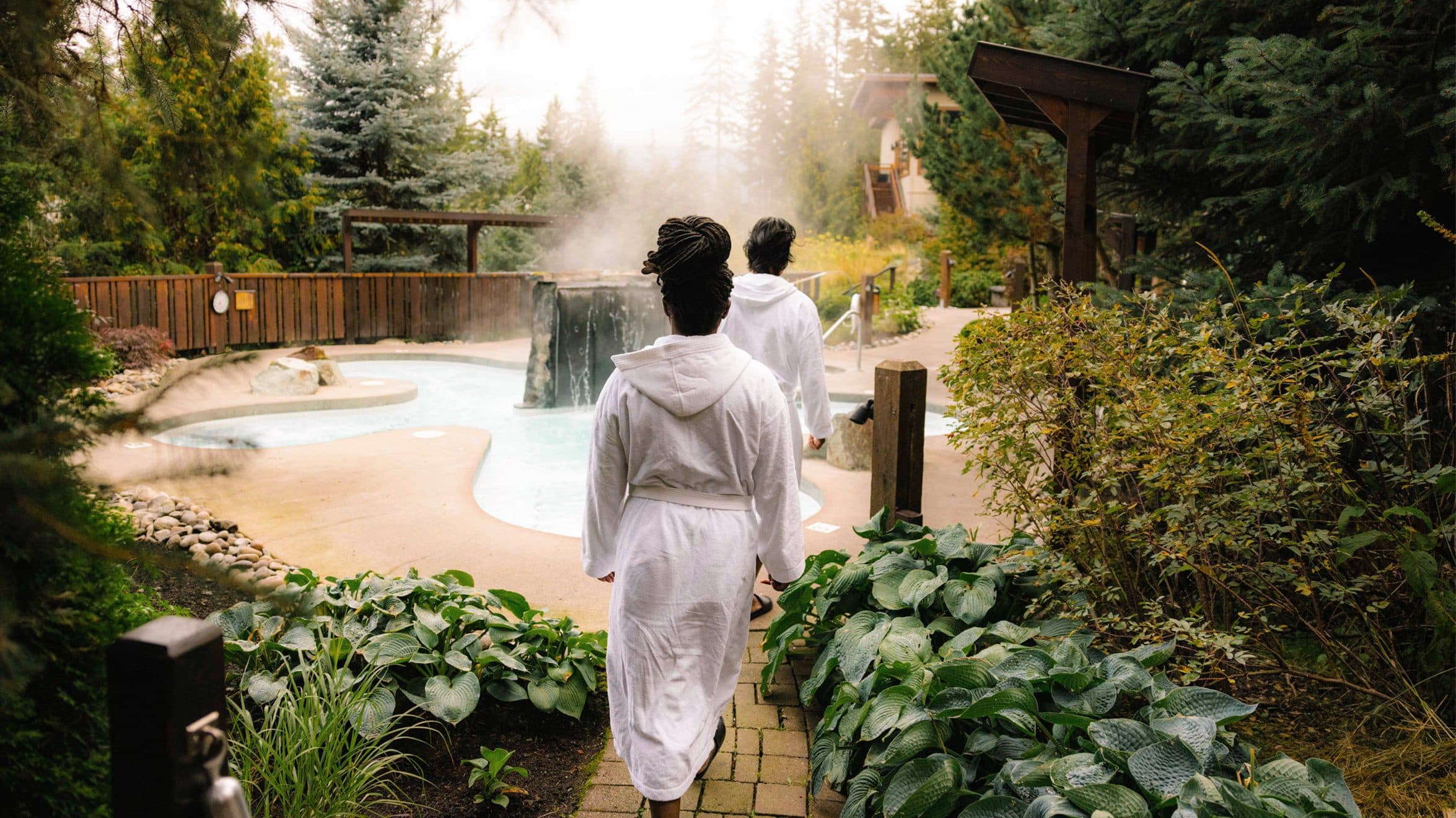
You’ve stood at the edge before: where you’re inches away from the first dip of a toe, ankle, or foot into an icy 3-degree tub of bone-chilling H2O.
Maybe you’ve stopped at the toe or the foot – yanking it out of the water while goosebumps roll from your feet to your forehead. And, maybe you’ve taken that one deep breath and gone all (or mostly) in; feeling the full body resistance to the frigid water then, eventually, settling into a slower breath, a calmer heartbeat, and some version of comfort in the chill.
Whether you’ve faced the cold plunge before (or if visualizing it now is your first exposure), you’ve been doing the exact same thing professional mountain bikers do every time they turn their front tire towards a new line that could have some real consequences; you’re facing something hard, on purpose…and growing your resilience.
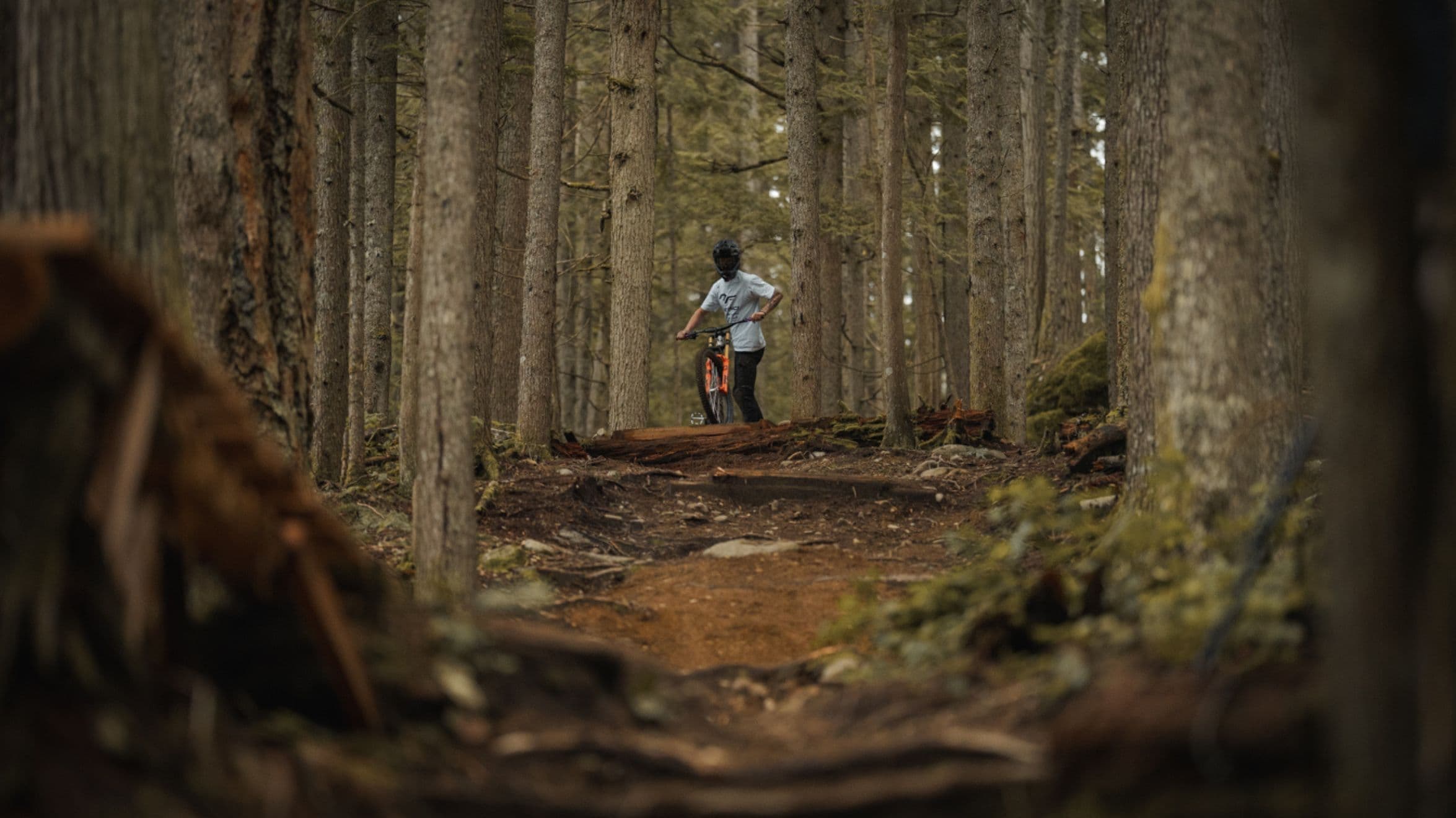
Image courtesy of Dylan Sherrard
Life in parallel
Steve Vanderhoek’s challenge of choice is most often mountain biking lines most people can’t even see, let alone fathom riding. At the same time as being a professional mountain biker who also loves building trails and filming the process, for the past two decades Steve has been a firefighter in North Vancouver, carrying the weight of calls and experiences that don’t stay behind when the shift ends
In the biking films he’s been in and created with his wife, Kelsey Toevs, Steve’s balancing more than keeping his bike steady on skinny bridges and sticking landings; there’s the balance of physical push, the awareness of his state and the understanding of the tightrope he rides between a smooth (and mindblowing) ride and a potentially life altering accident; a similar balance he’s navigating when he answers calls as a firefighter, where the tightrope’s his own safety and the lives of others.
Kelsey intimately knows another form of balance when it comes to their partnership. As a filmmaker and photographer who’s often behind the lens when Steve rides, she’s part of the process of creating shots, shaping stories, and documenting risks. As Steve’s wife, she’s balancing the emotional reality of the job she’s there to do and the reality of the consequences of professional mountain biking. And, as the spouse of a first responder, there’s another balance of realities she faces every time Steve leaves for a shift: understanding the importance of his work, his passion for the job, and the fragility of life – both the first responders’ and the ones he and his teammates work to save.
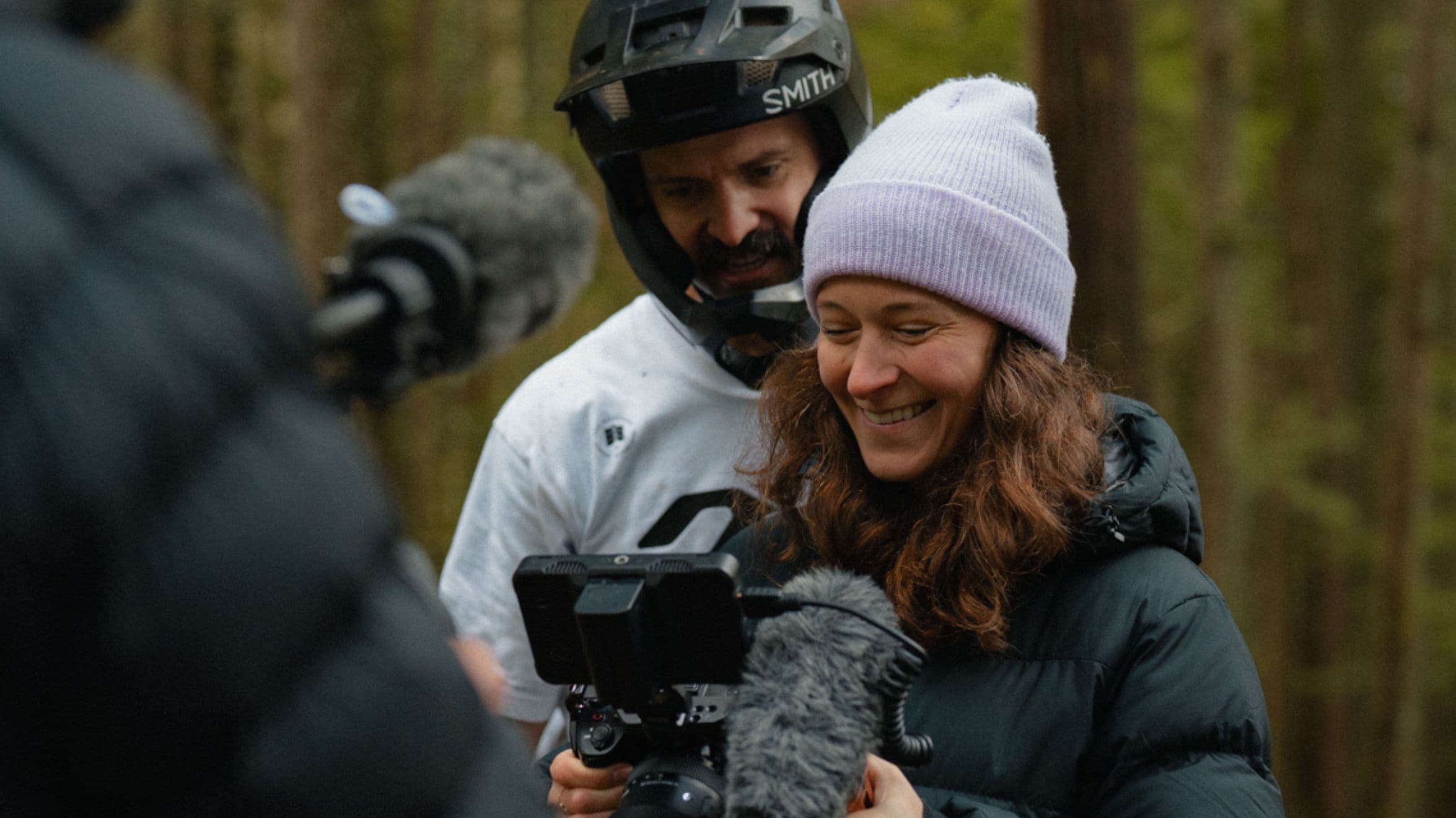
Image courtesy of Dylan Sherrard
The dynamic of a relationship that does double-duty, director/athlete creative partners plus being married, has its own nuances; how to balance vision with needs, contrasting ideas around shots and lines and the very realistic squabbles of two people who love each other working to build something meaningful…to name a couple. The pair is also a steady source of encouragement, confidence, respect, support and love for one another; a dynamic that’s rocket fuel for their success as a team.
It’s that dance, between creative partners and spouses, that got them in front of the camera just over two years ago; committed to giving a peek behind the curtain to what it looks like for them to make their multi-dimensional creative and romantic relationship work.
Neither of them knew that as they stepped up to the lens for that behind-the-scenes look at their production partnership they would surface a whole new creative project… and a distinctly new, deeply vulnerable and community-driven journey with mental health, friendship, and turning towards challenge.
The Turning Point
As the duo dove into filming, Steve experienced some incredibly horrific calls while on duty that began a downward trend in his ability to handle all the hard he was facing and holding.
Not one (at the time) to talk about what he was thinking or feeling, or let people into the more challenging parts of his life, it all started to be too much to keep in, and left Steve feeling like it was too hard to keep going.
“And it wasn’t just the calls. There were some other issues with my own depression and other issues going on, and I just went into a really, really dark place…and I did not really want to do the project anymore.”
At a point where the mounting pressures and traumas Steve witnessed daily while on the job began to show their true weight, they sat with not knowing if continuing on or stopping outright was the next best step. Right around that time, Steve was a guest on a podcast where he spoke openly about where he was at – giving the interviewer the real deal and doing it in an incredibly honest way.
After the episode was published, he happened to find a message from a man in Europe buried deep in his DMs – sharing the life-saving nature of the episode and what it had done to make that man feel seen and understood.
And that was enough for Steve to think there was something to keep going for.
“We kind of came together as a team, and I was like, if just this one thing of being open and honest could save this one life, like, let’s keep going.”
That was the true beginning of what would become Ride to Resilience – a documentary that does double duty, giving a raw look at the husband-and-wife team making a mountain bike movie and an intimate unfolding of stories of mental health, community care, friendship, facing life’s challenges and building resilience in the process.
To give himself space to start his personal healing process, Steve took a leave from work and began accessing the support services first responders can tap into. In filming, they slowly started bringing more of his story into the project.
Persisting through extreme exhaustion and burnout, filming interviews and sharing personal stories was a kind of challenge Steve hadn’t turned towards before. And, with the impact that one podcast had in mind, they kept moving forward, and eventually one person telling their stories became something much, much bigger.
Connecting to Community
The snowball effect around the film happened slowly, both in raising funds to keep the project going and in the stories they began to gather along the way.
While a supportive community experience had always been a huge part of Steve’s life in (and love of) mountain biking, a new kind of community started to build as momentum and visibility around the film took off; a group of folks willing to be vulnerable about their hurt and how they’re working towards healing grew, and grew.
Steve’s dad, who plays a significant and beautiful role in the film, is one of the individuals who slowly came around to sharing his personal journey with depression and complex trauma.
“A lot of the stories, including my Dad’s, were stories that actually didn’t fall into place right away. It took time and a lot of growth. Eventually, as he saw the potential and the impact of this to grow, and with the encouragement of his counsellor to be a part of the film, said he wanted to share his story.”
And as much as people in Steve’s personal life began to open up, so did his colleagues and coworkers; sharing their stories of challenge, pain and humanity in their personal lives, on top of what they face in their day-to-day as first responders.
And so, what began as one person’s story became something much larger once gut-deep honesty and a generous reception to each storyteller’s vulnerability entered the frame.
Beyond this being a group of people sharing their stories, Kelsey and Steve have felt firsthand how community care, and folks sharing the weight of life as we know it can help lighten the load. Kelsey even sees how the film can act as a permission slip for other people to say ‘Me too’ – and start their own turn towards their personal challenges.
“If watching the film resonates then someone reaches out to their close friend or family member and says, ‘I watched this great film, this is how I feel a lot of the time’, and it gives them that opportunity to chat about the film then chat about what they’re going through, I feel like is our best way of building more open communication between people through the film.”
Dr. Duncan Shields, Psychologist and Adjunct Professor in the Faculty of Medicine at UBC, whose voice, expertise and work with first responders mental health and PTSD is woven through the film. His stance on community’s role in helping and healing echoes Kelsey’s sentiment when he points to one of the most powerful and simple ways of getting help, and how it’s right next to us in our personal and professional communities:
“You are each other’s most accessible resources.”
The pairing of clinical support with certified mental health practitioners is absolutely part of Steve’s personal puzzle. Checking in with and checking on friends, having someone’s back and trusting that people have his has shown him how real resilience isn’t ‘having a thick skin’, and most definitely isn’t built in isolation.
“You are each other’s most accessible resources.”
Dr. Duncan Shields, Psychologist and Adjunct Professor in the Faculty of Medicine at UBC
Redefining Resilience
Being ‘tough’ or that ‘thick skin’ concept is often a quickly stated definition of resilience – and it’s what both Steve and Kelsey considered resilience to be prior to this filming experience.
When you watch an intense mountain biking crash (with some shown in the film), it’s obvious that some version of toughness and an iron-clad nervous system seem to be what riders need to succeed in the sport. Being able to get up after a massive spill and hit the jump again and again, rehab broken bones or recover from head injuries then get back on the bike requires an amount of physical, mental and emotional grit.
The beauty of this film when it comes to Steve’s understanding of resilience was how his definition shifted out of ‘pushing through’ and into a lot more awareness, and responsiveness:
“Now, resilience is being able to recognize and intentionally choose to either move forward with what you’re doing or hang it up if it doesn’t seem proper. And then utilizing the tools and the people that are around you. Just having thick skin is a recipe for disaster.”
That perspective has ended some of Steve’s riding days, where he’s been able to acknowledge his head’s not in it and that wrapping the day is the smartest and safest move. It’s also what helped him hit pause on work and take the leave he needed to seek support, focus on his health and get the version of himself back that he wanted to be.
Which is truly resilience defined; the ability to recover from difficulties. It’s our ability to experience something stressful or challenging, and return to our personal baseline; to note when we’re not ourselves, and find the tools and resources to get our us-ness back.
Building resilience happens in many ways, one being the willingness to turn towards challenge. By taking tiny steps towards something hard (whether physical or emotional), and recovering well, over time you’ll build your capacity for bigger challenges. Meaning: you’ll watch yourself step towards a whole laundry list of things you never thought you could or would.
And it starts small.
Steve visualizing different lines, seeing how he can move his bike across a slab or along a ridge before he even walks the feature is a micro move towards a new challenge. Finding a pocket of quiet to actually hear himself, and moving through the initial moment of his thoughts getting loud before they start to settle is another.
The impact of intentional rest
Sometimes the hardest thing is not chasing bigger features or pushing harder, but stepping out of the noise long enough to hear yourself think.
“When I head out into the trails in Squamish’s backcountry, as I drive past that line where cell service drops, the initial weight of knowing that people can’t get a hold of me just drops away. The peace and quiet and actually having to deal with my thoughts can be a little bit stressful at first, but that’s where I find the most peace.”
To step out of the stream of notifications, noise, and constant stimulation can feel almost disorienting at first. Stillness can be louder than movement. Silence can ask more of us than activity does. And yet, it’s often where some of the clearest understanding begins.
It’s in the discomfort of challenge, and in the willingness to step towards and even over that first hurdle of ‘hard’ that we slowly sink into comfort; finding a new way to deeply rest, to reset our need for constant stimulation, to get to know ourselves and what we really think, feel and want in a whole new way.
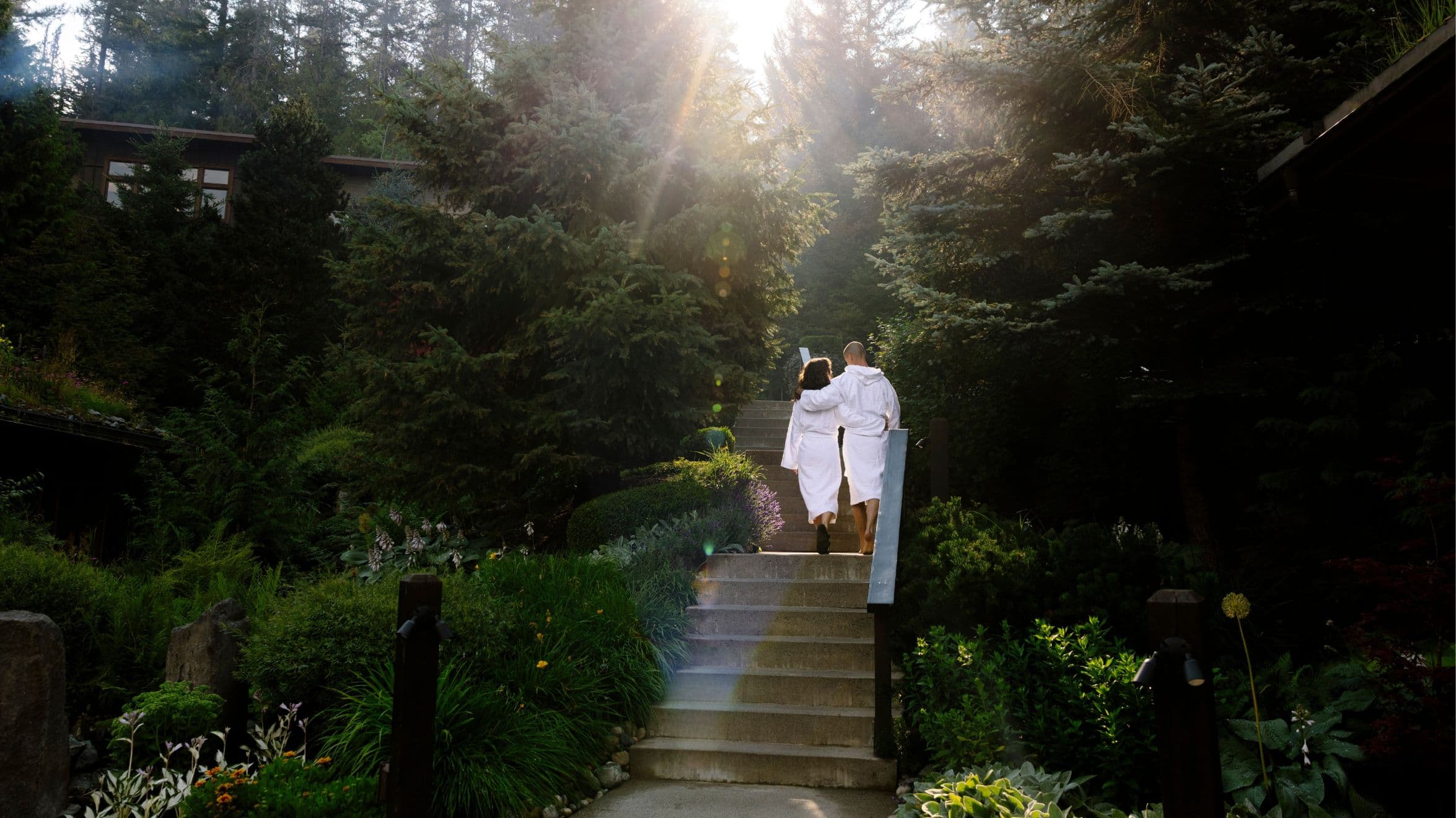
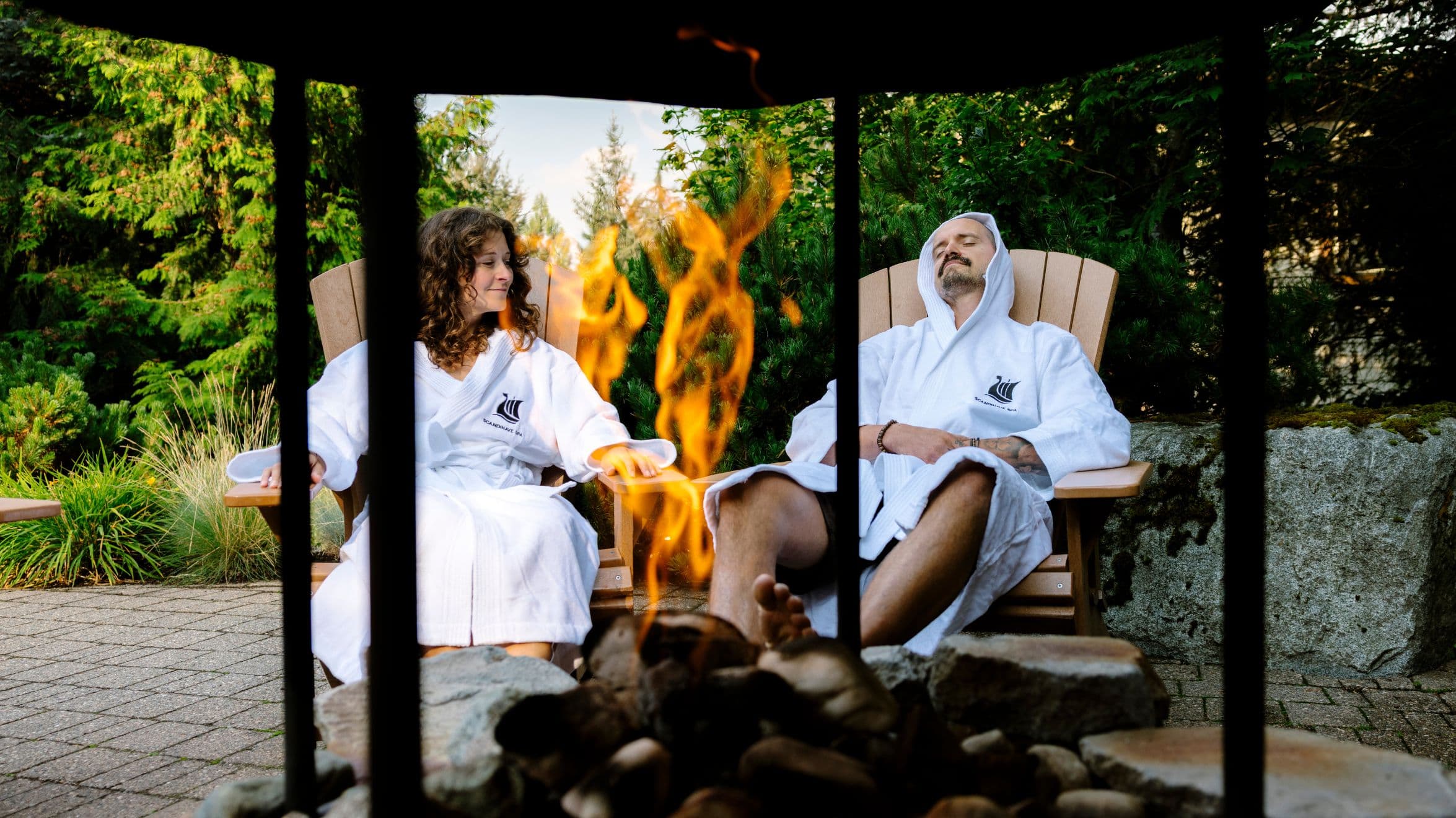
A cold plunge, silence, the absence of distraction: all of it creates a space that asks us to meet ourselves without the usual escape routes. In that space of quiet, challenge and rest stop being opposites; they become two ways of meeting reality more honestly.
Then, when we find the resources – the people, the programs, the practices – to help us navigate what we hear or feel, we chart a path towards a version of ourselves that’s more…well, ‘us’. Where we start to move in a direction where we physically, mentally and emotionally feel the way we want to feel. Where we act and behave in a way that expresses our values. Where we feel connected to others, to ourselves, to life as we know it.
These chosen challenges build our resilience. And, ultimately, bring us home to ourselves.
Onward, to Resilience
Ride to Resilience is an invitation to look more closely at what it means to face challenge with honesty, to lean into connection instead of isolation, and to let rest and intentional pauses do some of the work we usually ask effort to do alone.
It’s a film rooted in one couple’s experience, but its message reaches far beyond mountain biking or first response. It speaks to the human work of becoming more willing, more connected, and more able to navigate this very human experience we all find ourselves in.
The film invites viewers to recognize their own avoided edges and consider what might happen if they approached them differently. In that sense, the premiere is not just a screening; it’s an invitation to reflect and connect; to see where you can show up for others, and remember who’s showing up for you.
And it’s an invitation to step up to a chosen challenge, or a new edge. Whether that edge looks like a trail, a conversation, a full-body cold plunge or a moment of silence, the first step is often the same: to stop turning away.
No matter where or how you approach challenges, experience your edges, or what you notice you turn away from, every time you choose to turn towards something that seems hard you’re in the same process; you’re turning towards challenge, and growing your resilience.
You’re taking your own ride with, and towards, a more resilient life, and version of you.
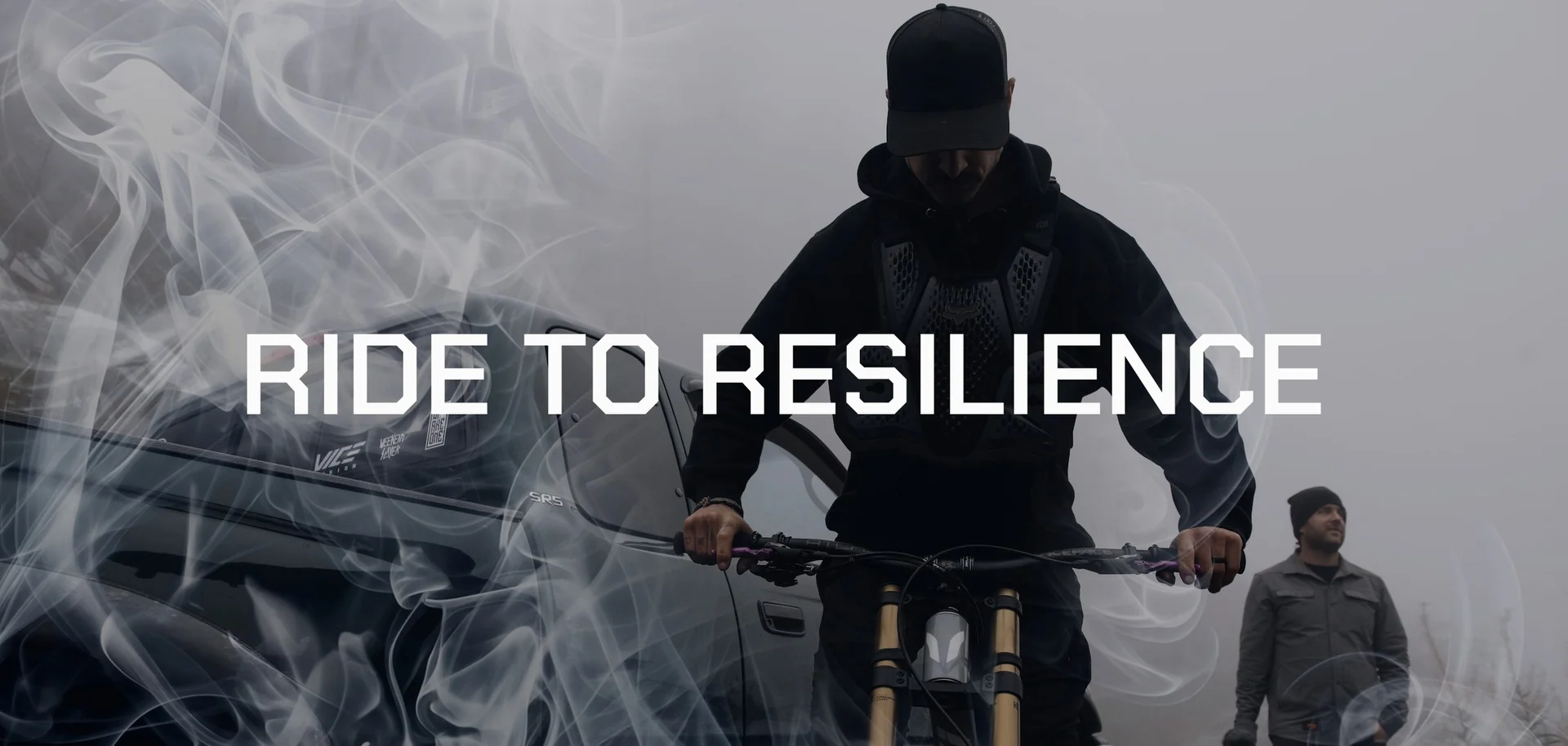
The story doesn't end with the film
Kelsey and Steve could have taken Ride to Resilience to a streaming platform or put it behind a paywall. Instead, they made a different choice.
They believe too strongly in the conversations this film can start—and in the possibility that Steve’s story might reach someone who needs to hear it—to put a barrier between the film and its audience. So, on September 3 at 8 a.m., Ride to Resilience will be released free on YouTube, making it available to anyone, anywhere.
And the work isn’t ending there.
Steve and Kelsey have created Ride to Resilience, a new purpose-driven cycling and storytelling initiative built around the same ideas that shaped the film: resilience, community and the power of sharing real stories. The organization will use storytelling and fundraising to support people facing physical, mental and social challenges, with areas of focus ranging from mental health and access to bikes to inclusion and recovery.
Their hope is to take what began with one story and create space for many more—and to use the cycling community as a force for good.
Watch Ride to Resilience on YouTube September 3 at 8 a.m.

Jess Robson is a Leadership + Performance Coach who helps high performers unlock more depth and range in their capacity + potential. Focusing on self-awareness and the nervous system’s role in using their soft skills well, Jess offers 1:1 coaching clients and corporate groups tangible tools, accessible frameworks and simple principles that help people work with their emotions instead of getting worked by them, and bring their best to the moments that matter most.
She currently lives in Squamish, BC, Canada, where she enthusiastically chases her fast friends through the trails, her two kids (both under five) around pump tracks, chooses the challenge picking heavy things up and putting them down again, and finds solace next to the sea. Connect with her at www.jessicarobson.com or over on Instagram.

STRAIGHT FROM THE SOURCE