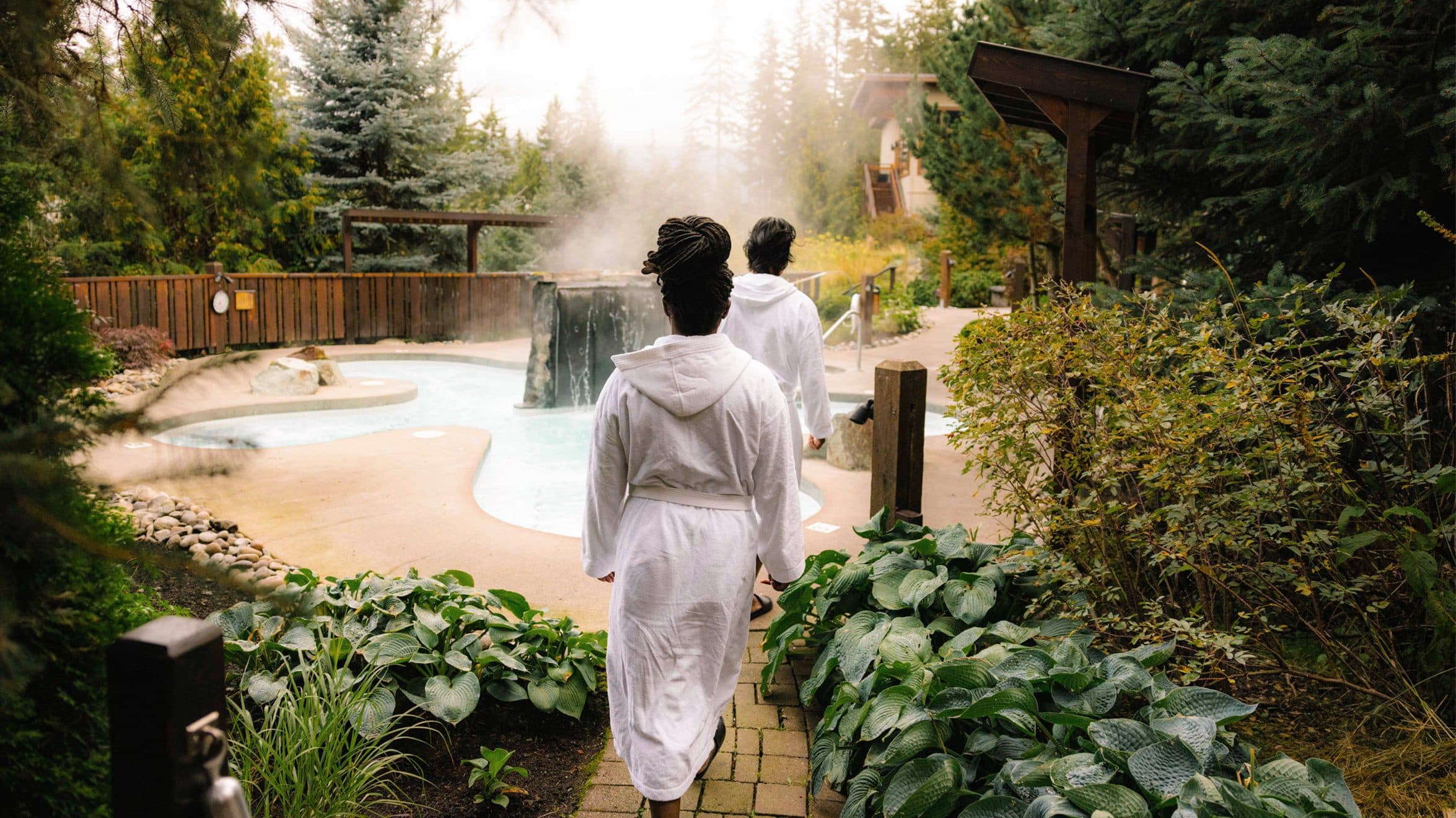
How do you want to feel tomorrow?
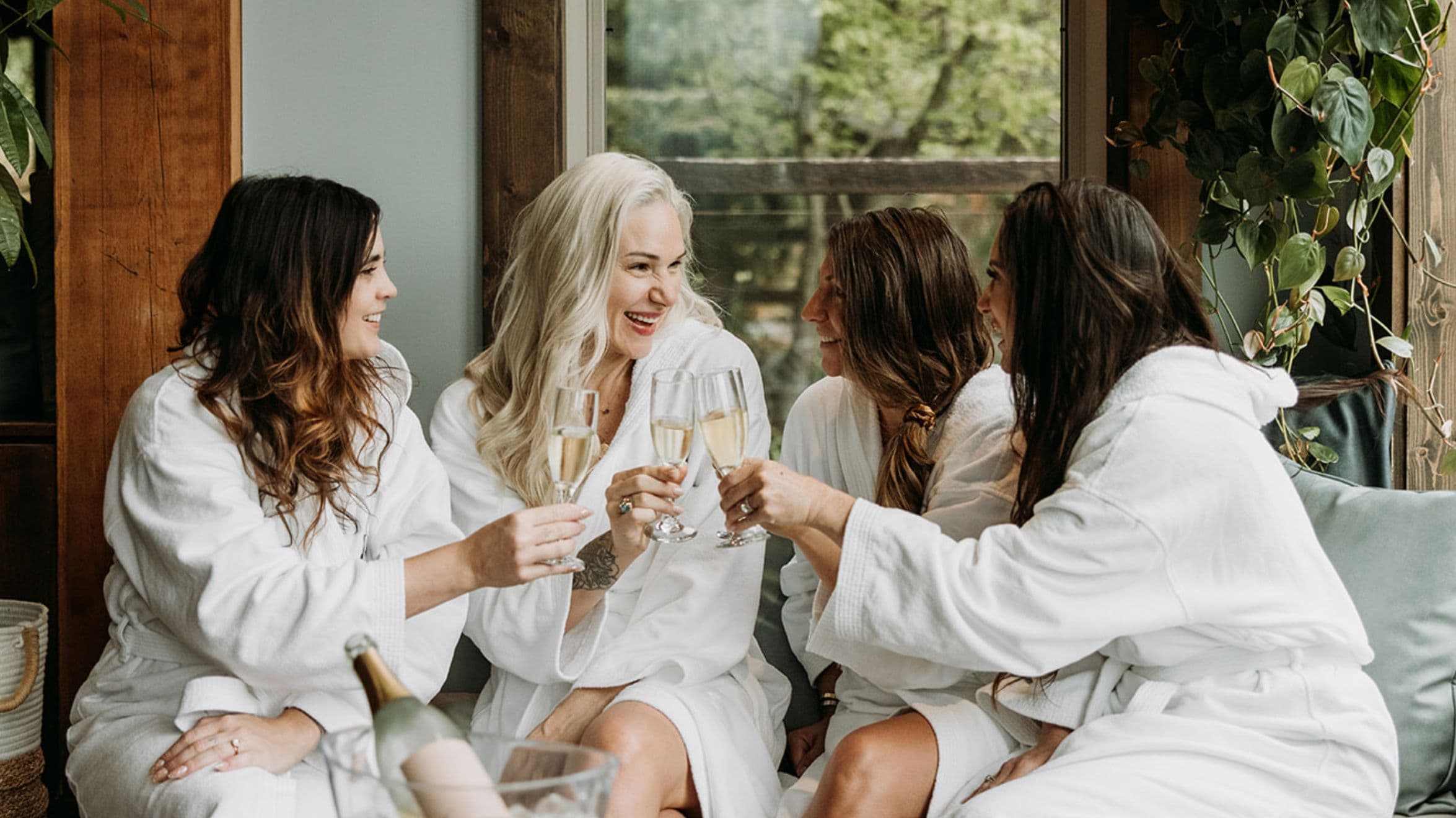
A FIRESIDE CHAT WITH THE WOMEN OF GLIMMER WINE
What the sober curious movement can teach us about intentional wellness
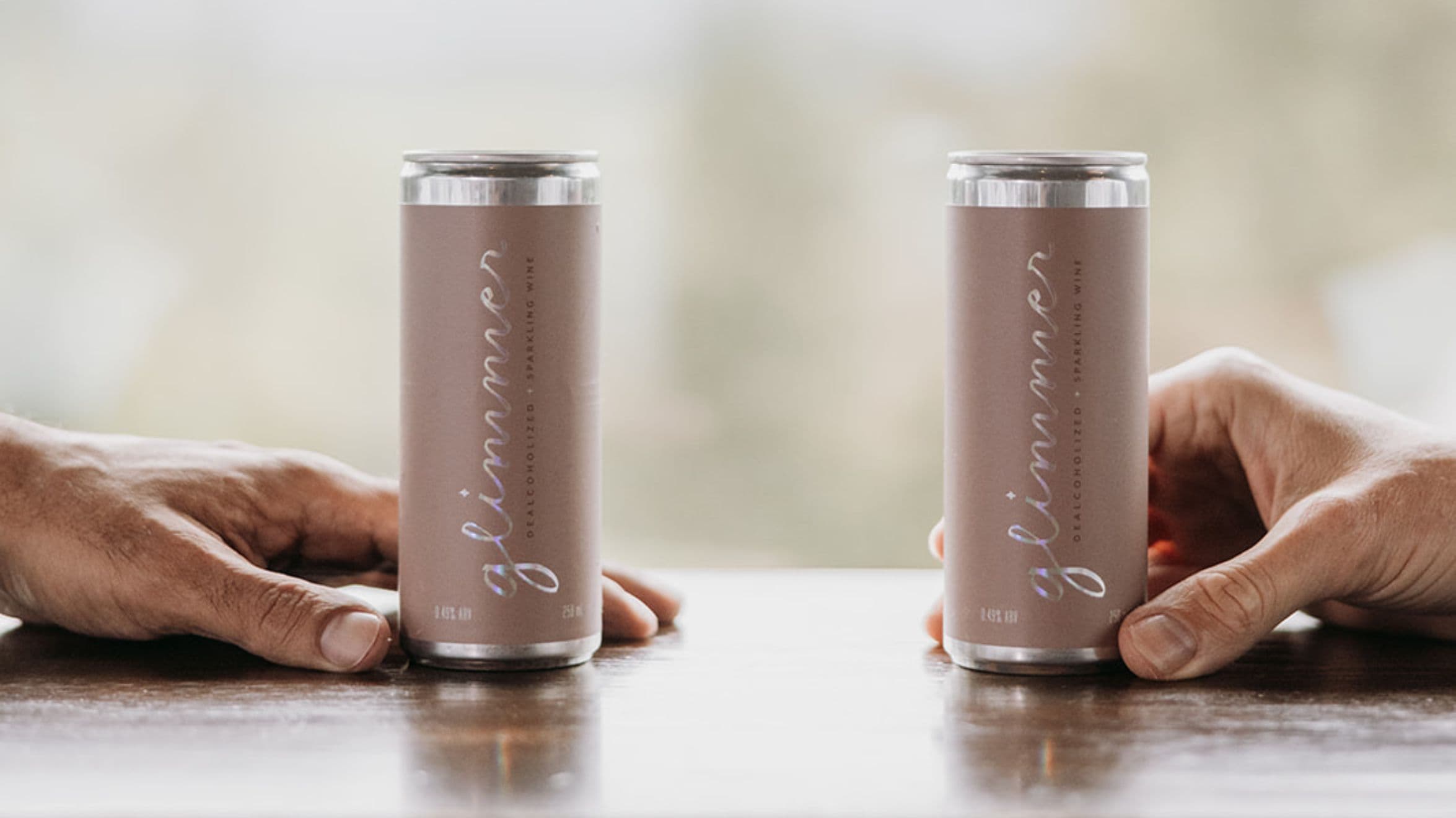
For Glimmer founders Jane Stoller, Marina Billinghurst and Janet Helou, the journey didn’t begin with a business plan. It began with a desire to celebrate in a way that aligned with how they wanted to feel the next day. Their story explores the rise of the sober curious movement, the changing wine industry and the shared philosophy that brought Glimmer Wine and Scandinave Spa Whistler together: that intentional wellness is built through small choices that help us show up more fully for our lives.
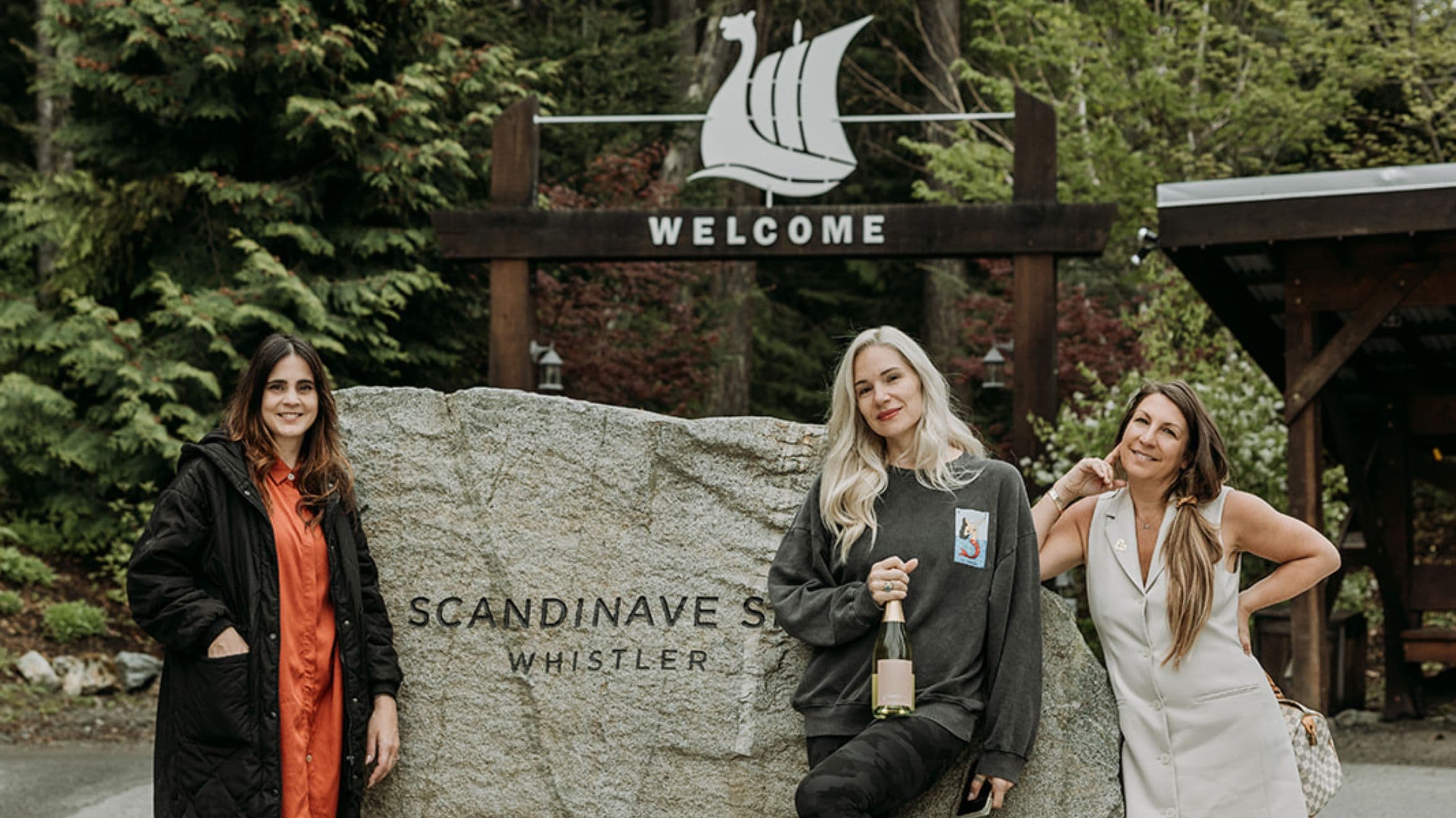
“I didn’t want to feel ostracized because I was the one not drinking.”
When Marina Billinghurst says it, there’s a familiarity to the feeling. Most of us have experienced some version of it. We make a choice that feels right for us, but quietly wonder if it also means stepping outside the moment, away from our peers.
For Marina, that choice arrived after becoming a mom. She still loved sharing a bottle of wine over dinner with friends. She loved the ritual of opening something beautiful and the way a meal has a way of stretching into conversations that last longer than anyone planned. None of that had changed. What had changed was how she wanted to feel the next morning.
“I wished I could go out and have a glass of something, maybe have a glass of wine, but then switch it up and still stay part of it,” she says. “It all kind of made sense with who I wanted to be.”
That feeling is becoming surprisingly common. The sober curious movement has grown quickly over the last few years, but reducing alcohol isn’t really the story. The more interesting shift is what people are choosing instead. Better sleep. More energy. Greater clarity. Feeling present for the people who matter. They’re still saying yes to celebrations and dinner parties. They’re simply becoming more intentional about how they participate in them.
Jane Stoller understood that shift instinctively because she was living it herself. As an entrepreneur and productivity expert, she’d spent years helping people make better use of their time. Then she became a mom to twins, and suddenly those ideas became deeply personal. Time, energy and attention weren’t unlimited resources anymore. Every decision, even the small ones, had a ripple effect on how she showed up for her family, her work and herself.
“We were changing our habits and reducing our drinking at the same time,” Jane says. “I started looking into the non-alcoholic market and researching what was out there. I thought, if we can make a really good product and create a beautiful brand, I think there’s something here.“
That “something” eventually became Glimmer.
Going all in
It’s remarkable how often Whistler appears throughout Glimmer’s story. Jane lives here. Marina spent years ski racing on these mountains as a child. It was here that the two eventually developed a coaching and mentorship relationship that grew into friendship. Janet Helou, who would later become Glimmer’s third co-founder, also became part of that circle after a chance encounter with Jane at Whistler’s Wild Blue restaurant. Even today, many of the places connected to the brand’s beginnings are woven into the community.
One of those places was Table Nineteen. Over a Mother’s Day lunch, Jane ordered a glass of Oddbird, a premium dealcoholized sparkling wine from Sweden. She still remembers the moment.
“I had a glass of Oddbird and I was like, ‘Wow, this is so good.”
What surprised her wasn’t that it was alcohol free. It was that it felt complete. Until then, many non-alcoholic options had felt like substitutes: overly sweet mocktails, sparkling juices or drinks that made it obvious you were choosing something different from everyone else at the table. This tasted like something you would order simply because you wanted it.
Jane went home curious. “I remember saying to my husband, ‘I’m going to look into what this non-alcoholic market is about.'”
That curiosity turned into eight months of research. Jane studied products across Canada, Europe and the United States, looking beyond the bottles themselves to understand where consumer behaviour was heading. What she found was a category that was still in its infancy, particularly in Canada. Premium dealcoholized wines were gaining momentum internationally, but there were very few options that delivered both exceptional taste and an experience people would genuinely choose.
For Jane, that distinction mattered. If someone was going to pour a glass of dealcoholized wine, it couldn’t feel like a compromise. It had to hold its own beside its alcoholic counterpart, with the same complexity, thoughtful branding and sense of occasion. Whether it was opened at a holiday dinner or on a Tuesday night with friends, it deserved a place at the table.
The timing also felt right. Younger generations were drinking less than those before them, while conversations around sleep, mental health, athletic performance and longevity were becoming part of everyday life. People weren’t giving up on the celebration. They still wanted dinner parties, weddings, milestones and evenings spent with friends. They were simply looking for more choice in how they celebrated.
By the time Jane picked up the phone to call Marina, she was responding to a shift she believed was only going to grow.
Marina didn’t need much convincing. “I was like, ‘Okay, I’m doing this with you. One hundred percent,'” she laughs. For Marina, the connection to wine was already deeply personal. Her brother owns Three Sisters Winery in British Columbia’s Okanagan Valley, giving her a close view into both the craftsmanship of winemaking and the challenges facing the industry today. Climate change continues to affect harvests. Economic pressures have made operating costs increasingly difficult, and changing consumer preferences are forcing wineries to rethink what the future looks like.
Creating a premium dealcoholized wine adds another layer of complexity. The wine still has to be crafted first, before the alcohol is carefully removed in a way that preserves the aroma, texture and complexity people expect from a great sparkling wine. It’s a technically demanding process that requires more time, more expertise and, ultimately, more investment.
That’s where Janet Helou became an essential part of the story. As both a sommelier and food scientist, Janet brought a level of technical expertise that complemented Jane’s entrepreneurial vision and Marina’s creative instincts. She understood what made great wine great, and how difficult it is to preserve those qualities once the alcohol is removed. Just as importantly, she brought years of industry knowledge and relationships, helping turn an ambitious idea into a product that could earn the respect of wineries, restaurants and consumers alike.
Together, the three founders each brought something different to Glimmer. Jane recognized the opportunity and knew how to build a business around it. Marina shaped a brand that felt warm, approachable and beautifully designed. Janet ensured the product delivered on the promise that brand was making. Because no amount of thoughtful branding can compensate for a disappointing glass of wine.
Those milestones are worth celebrating, but they also tell a bigger story. The industry is evolving because people’s expectations are evolving. More and more, consumers are looking for products that support the way they want to live, not because they’re trying to have less fun, but because they want to feel more present for it.
Distraction is not recovery
After spending time with the Glimmer team, we were struck by how little our conversations revolved around alcohol. They kept returning to the same themes instead: energy, attention and showing up fully for the people and work that mattered most.
We hear versions of that every day at Scandinave Spa Whistler. Guests don’t usually arrive asking for hotter saunas or colder plunges. They tell us they’re exhausted. That work has been relentless. That family life is busy. That their minds feel like they’re running in ten different directions at once. Many admit they can’t remember the last time they sat quietly without reaching for their phone.
Somewhere along the way, many of us have started confusing distraction with recovery. After a long day it’s easy to collapse onto the couch and scroll through our phones, convincing ourselves we’re resting. Our bodies may have stopped moving, but our minds haven’t. They’re still processing information, responding to notifications and jumping from one thought to the next. It’s no wonder so many of us still feel tired.
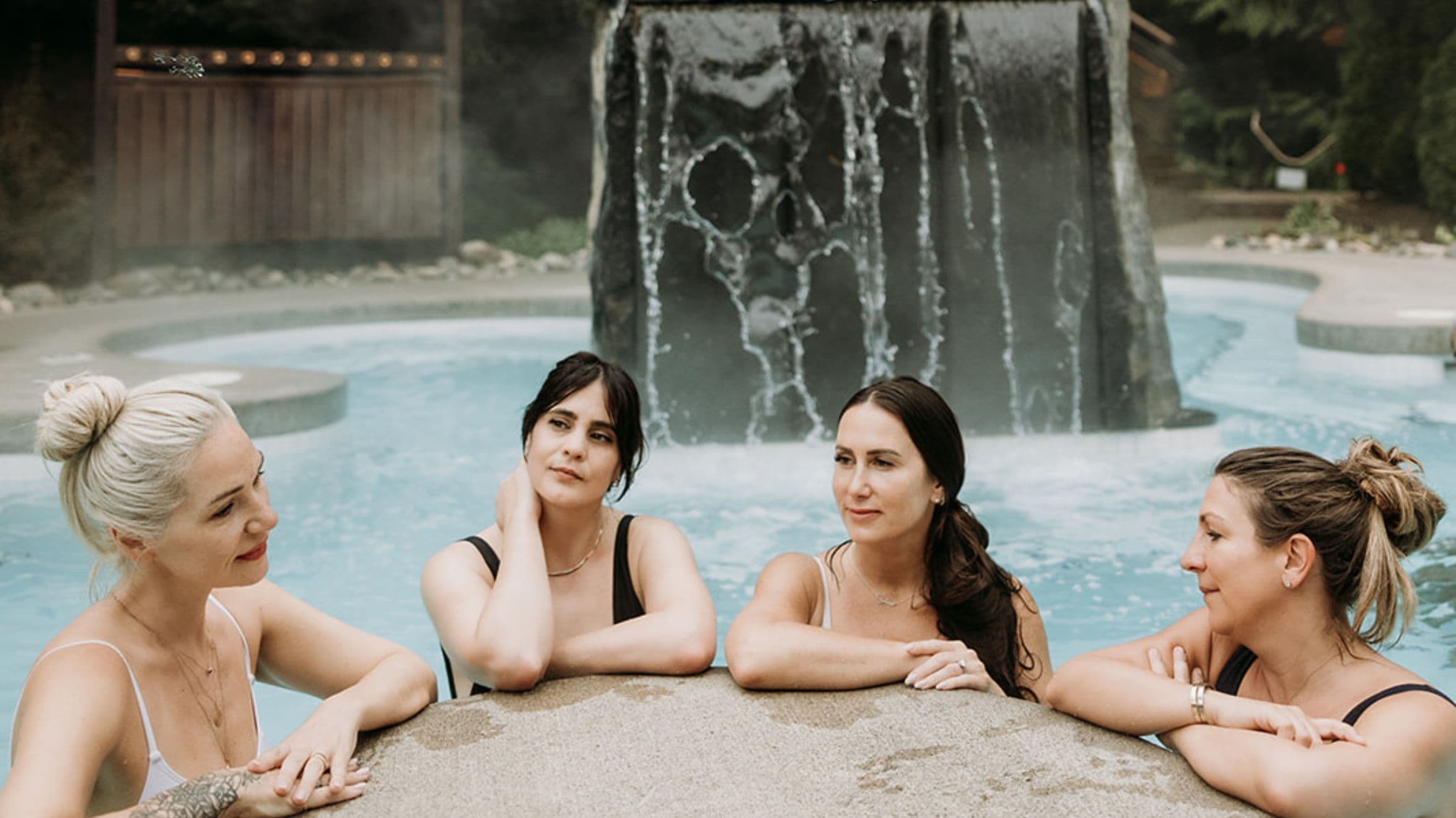
In the end, they’re looking for the same thing the Glimmer ladies were looking for. Not an escape from their lives, but enough space to return to them feeling a little lighter.
Intentional wellness
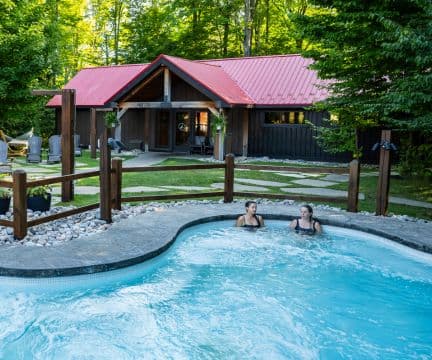
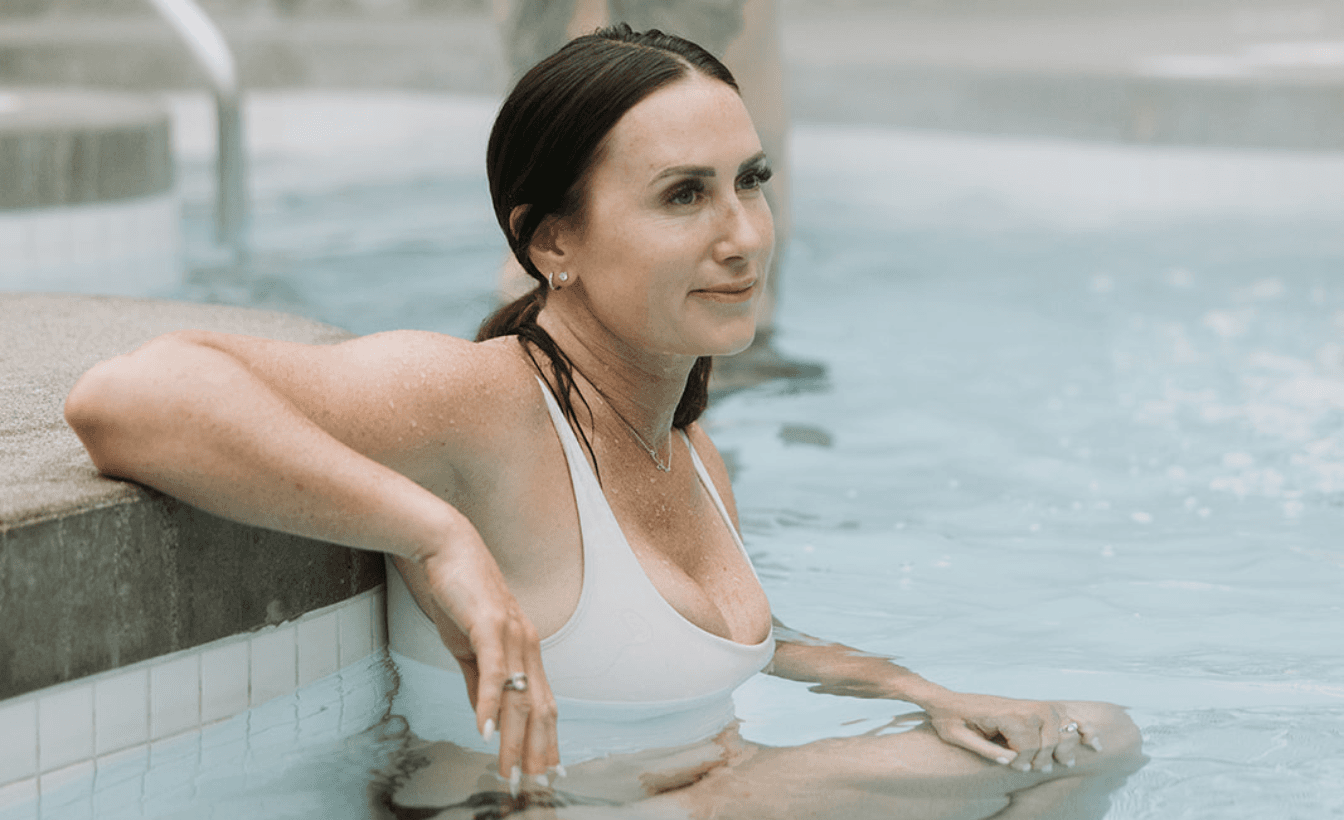
That’s part of what makes the experience at Scandinave Spa Whistler feel so different. The Thermal Journey itself is simple: move between hot baths, Nordic saunas and steam rooms, cool off in cold plunges or waterfalls, then settle into one of the indoor or outdoor relaxation areas before repeating the cycle. The real shift, though, often comes from everything that isn’t there.
Without phones, conversations or the pressure to capture and share every moment, something unexpected begins to happen. The mind gradually lets go of the need to keep scanning for what’s next. Thoughts slow down. Your breathing settles. You become aware of things you hadn’t noticed all day: the sound of moving water, the wind in the trees, the warmth of the sun, or simply the feeling of sitting still without needing to fill the silence.
Just the sound of moving water, the surrounding forest and the rare opportunity to be fully present.
Without the constant pull of notifications, your mind finally gets a little space. It’s that moment your brain quietly says, “Oh, hi. There you are.”
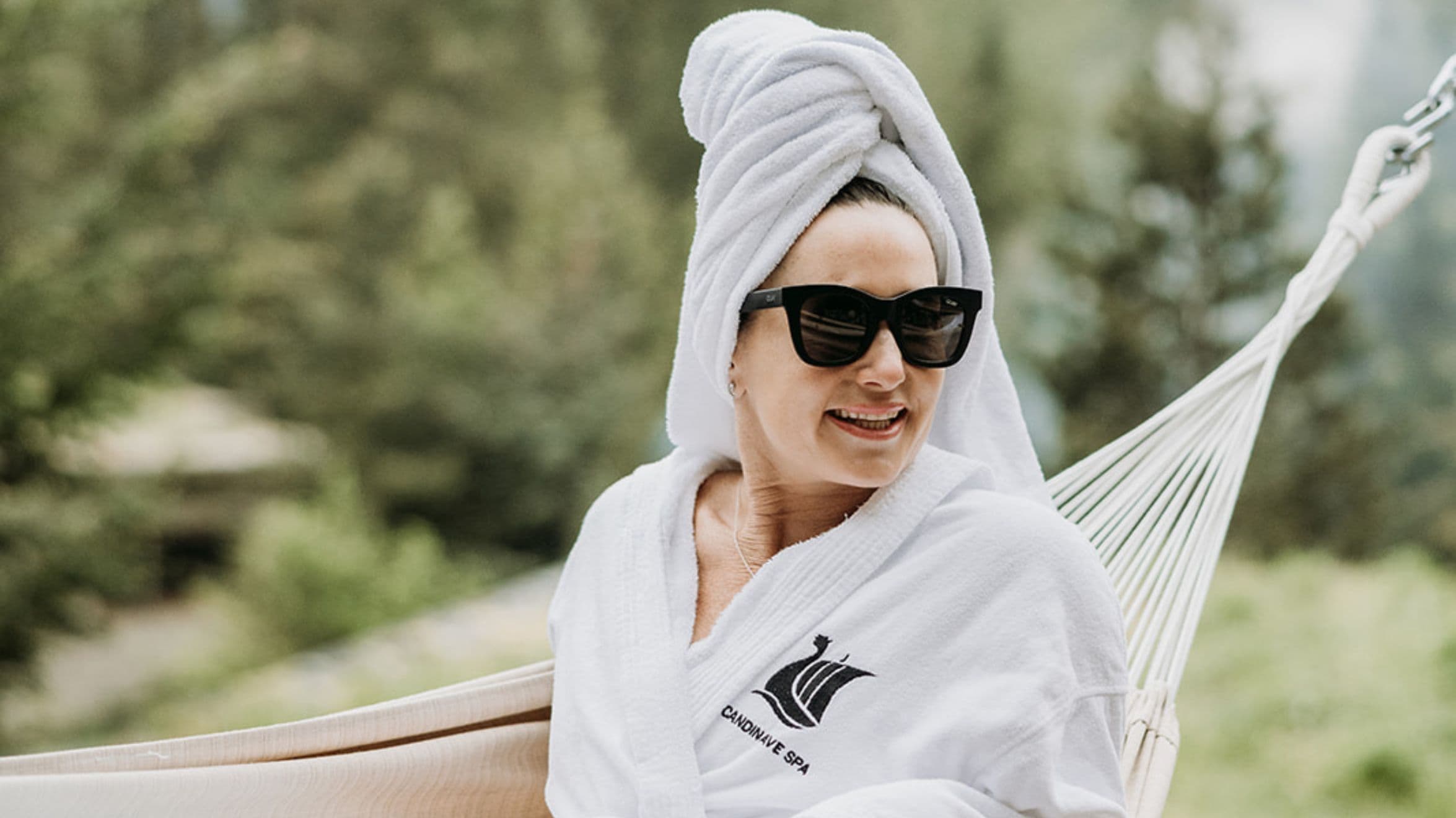
Marina smiled when she described where her best ideas tend to find her. “The spa is where you clear your head. It is intentional.” Then she laughed. “Walking the dog, driving… or at Scandinave.”
It made perfect sense. Creative ideas rarely arrive when we’re staring at a screen trying to force them. They show up while we’re walking, driving, showering or sitting quietly in the forest because those are the moments our minds finally have enough room to wander.
The more time we spent with Jane, Marina and Janet, the more we realized this story had very little to do with what was in the glass. Instead it was about paying attention.
Paying attention to the habits we rarely question. The ones we repeat because they’ve become routine, whether that’s pouring a drink at the end of the day, reaching for our phones the moment we have a quiet minute or convincing ourselves we’re resting when our minds are still racing.
None of those choices are inherently good or bad. The point isn’t perfection, and it certainly isn’t judgment. It’s simply becoming curious enough to ask whether the rituals we’ve built into our lives are helping us feel the way we want to feel.
That’s what we found so compelling about the partnership between Glimmer and Scandinave Spa Whistler. On the surface, one is a premium dealcoholized sparkling wine and the other is a silent Nordic spa. Spend time with the people behind both brands, though, and you realize they’re asking the same question. “How do I want to feel tomorrow?”
Restored, not depleted.
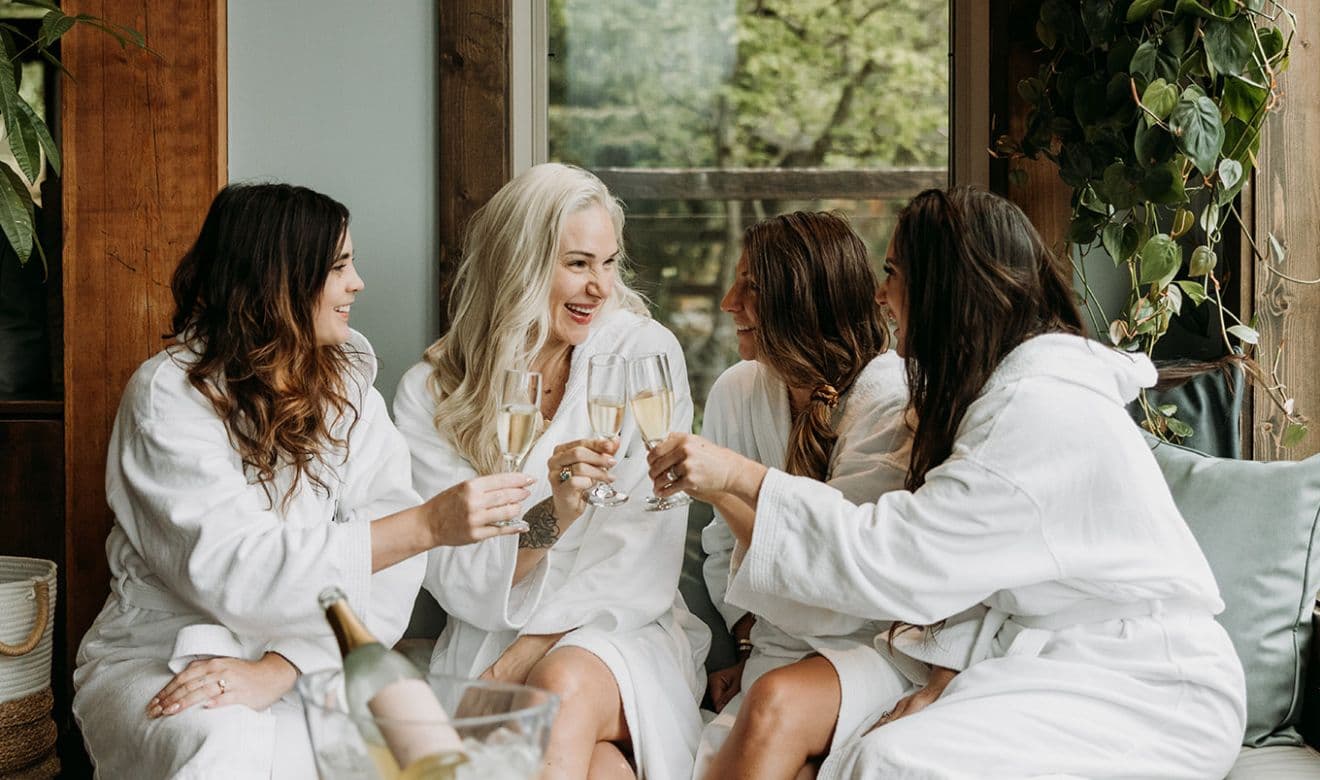
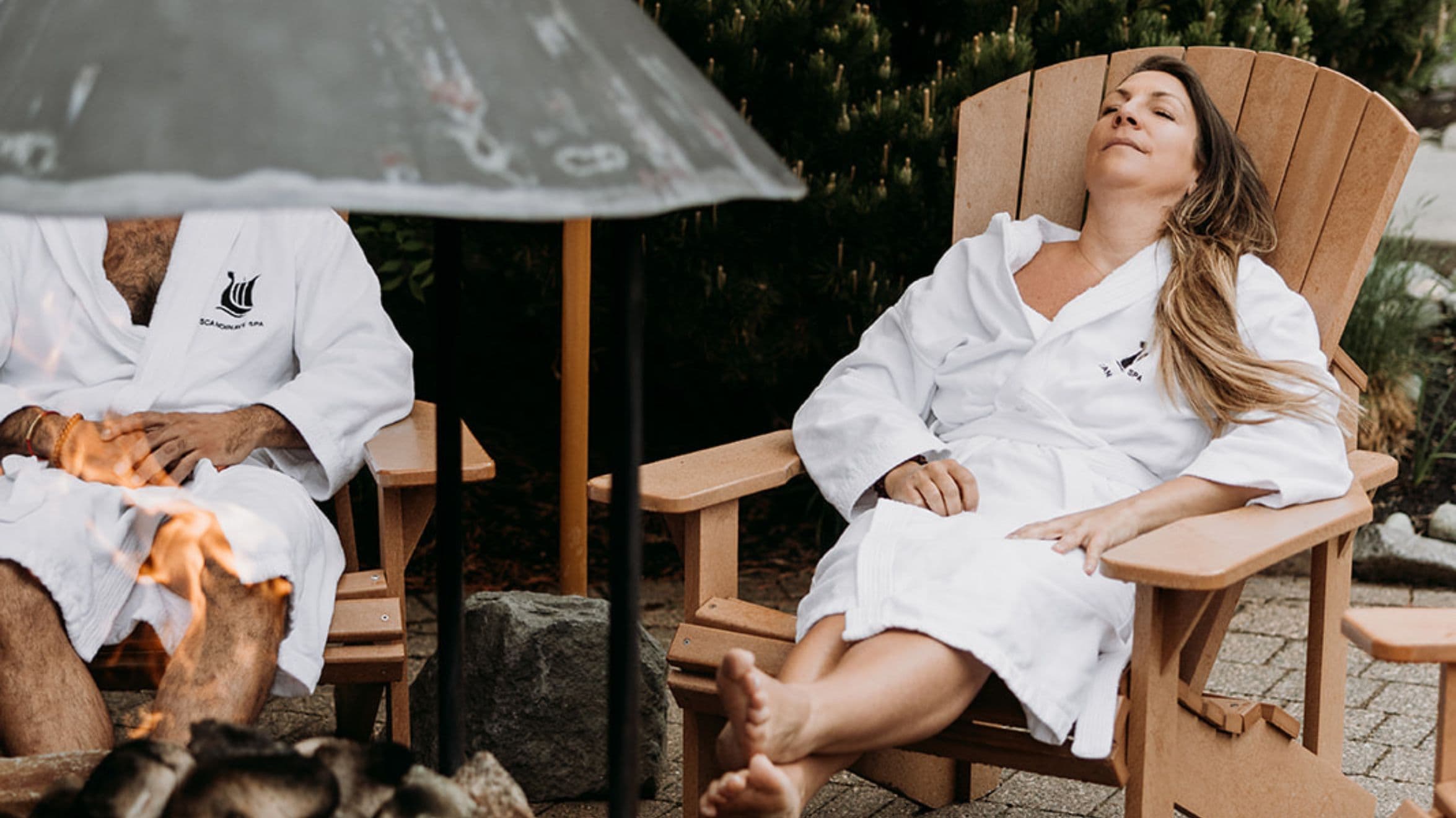
For some people, the answer might be choosing a dealcoholized sparkling wine at dinner. For others, it might be putting their phone away for an afternoon or spending a few hours moving between hot baths, cold plunges and the quiet of the forest. The ritual itself matters less than the intention behind it.
We’re all trying to build lives that feel full. Maybe the next step isn’t adding something else to the list. Maybe it’s paying closer attention to the small choices we make every day and keeping the ones that help us show up with a little more energy, a little more clarity and a little more presence.
Because in the end, that’s what intentional wellness really is: creating a life that feels good to be in, not just one that looks good from the outside.
Since launching, Glimmer has grown to more than 270 retail and hospitality locations across Canada and has achieved continued triple-digit year-over-year growth. In 2026, co-founder Jane Stoller was named one of BC Business Magazine’s Women of the Year in Entrepreneurship. Glimmer is also served at the Scandinave Spa Whistler Bistro. Find out more about how Glimmer came to be here.
GIVEAWAY
How do you want to feel tomorrow?
Enter for your chance to win a spa day for two at Scandinave Spa Whistler, complete with Glimmer dealcoholized sparkling wine. Whether you're sober curious or simply looking for a different way to unwind, it's the perfect opportunity to discover how small, intentional rituals can help you feel your best.
Enter to win
STRAIGHT FROM THE SOURCE