The rituals that keep us grounded
A conversation with endurance athlete Connor Emeny
A CONVERSATION WITH ENDURANCE ATHLETE CONNOR EMENY
Where the ritual begins
Long before the trailhead, before anyone straps on a watch or laces a shoe, something else is already underway.
The house is quiet, but it’s already awake. A soft light glows over the kitchen counter while the rest of the neighbourhood sleeps. Coffee brews for some. Tea steeps for others. Someone fills bottles with water and electrolytes while another reaches for the same favourite mug they’ve used before every long run for years. A stack of clothes sits folded over the back of a chair from the night before so the morning doesn’t require thinking. The kitchen counter is scattered with a rainbow of foil gel packets, bananas, half-made peanut butter toast and the small essentials that somehow always find their way into a running vest. A watch charges beside the front door. Sunscreen waits next to the keys. Someone ties their hair into the same ponytail they’ve worn for every race. Someone else checks the weather, knowing full well it won’t change the plan. A deep breath. One last look around the house. Then the door closes quietly behind them, and the day they’ve been imagining all week finally begins.

Nobody photographs this part. It never makes the highlight reel or the finish-line post, because it’s private, almost forgettable, just the small, repeated motions a person makes before doing something hard. But talk to anyone who’s spent years asking their body to go further than it wants to, and a pattern shows up: the ritual is the real thing, just smaller. A rehearsal for showing up at all.
This is where Connor Emeny begins, too.
Emeny is a two-time world record holder, the first person to complete an Iron-distance triathlon on all seven continents. A feat that took four years, a global pandemic, and a trip to Antarctica most people wouldn’t survive packing for. He wrote a book about it called All In, and yet he still keeps the small things, the ones that would never make it into a highlight reel. We caught up with him ahead of Buckin’ Hell, Coast Mountain Running’s brutal, beautiful 50-kilometre climb through North Vancouver’s old-growth forest, to ask him something simpler than how he built a record. We wanted to know what he does before anyone’s watching.
His answer started, unsurprisingly, with coffee.
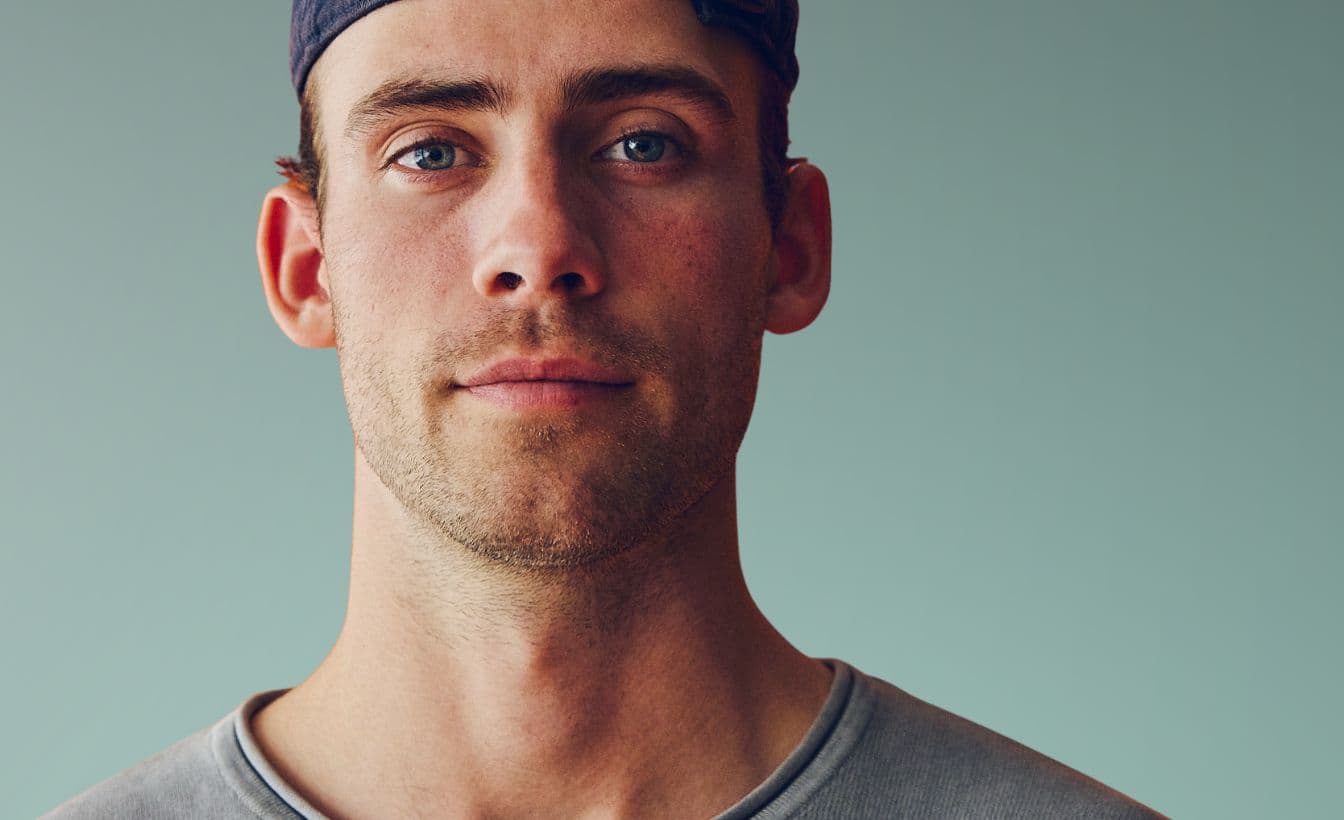
“It’s important for me to feel mentally prepared ahead of time, to ensure I have a good session.”
Connor Emeny
How many times can I say coffee?
“How many times can I say coffee?” he laughs, when asked what rituals have shaped him as an endurance athlete, and he means it literally. Coffee shows up in nearly every answer he gives.
There’s a coffee to start the morning, because it sets the tone for whatever’s ahead. There’s another after a brutal session, one that somehow turns exhaustion into a reward instead of a cost. And there’s the coffee shared with another athlete, trading lessons the way people once traded stories around a fire, something he calls a rite of passage.
Coffee comes up so often it stops sounding like a drink and starts sounding like punctuation, a way of marking where one part of the day ends and another begins.
The night before a big effort, the ritual shifts. Clothes get laid out, a cup of tea replaces the coffee, and a diffuser fills the room with something calming. Emeny visualizes the day ahead, not to psych himself up, but to arrive already a little bit rested.
Then there’s the one nobody would guess. During long runs, once the miles stretch past the point of easy conversation with himself, he pulls out his phone and FaceTimes someone: a family member, a close friend, someone he hasn’t talked to in a while. It’s less about motivation than company, a way of turning solitary hours into something shared, even from a distance.
None of these rituals are complicated, and that might be the point. A cup of tea and a phone call aren’t going to win anyone a race, but they’re the reason a person can get to the start line at all, over and over, for years.
It doesn’t take long before you stop thinking about Connor’s rituals and start thinking about your own. The song you always play before an early meeting. The walk around the block after a difficult day. The coffee you drink before anyone else in the house wakes up. The mantra you whisper to yourself before you take that cold plunge. The little routines that seem ordinary until you imagine life without them.
Along the trail
There’s a moment, always, when the run stops being fun.
Emeny knows exactly where it lives. It is somewhere past the point of feeling strong, somewhere before the finish is close enough to taste, when the mind starts negotiating. It gets hard, and quiet in a way that isn’t peaceful.
“I don’t have to do this. I chose to do this.”
Connor Emeny
It’s a phrase that sounds almost too simple to work. But there’s a difference between suffering that happens to you and suffering you signed up for, and Emeny has built an entire vocabulary around the gap between the two. He calls it his “Cookie Jar,” and every hard moment he survives gets tucked away inside it, saved for later. When things get unbearable, he reaches in and takes a bite. Proof, in the form of memory, that he’s been here before and made it out.
It’s a strange kind of comfort, reminding yourself of pain in order to get through more of it. Maybe that’s what experience actually is: a growing collection of evidence that you survive things.
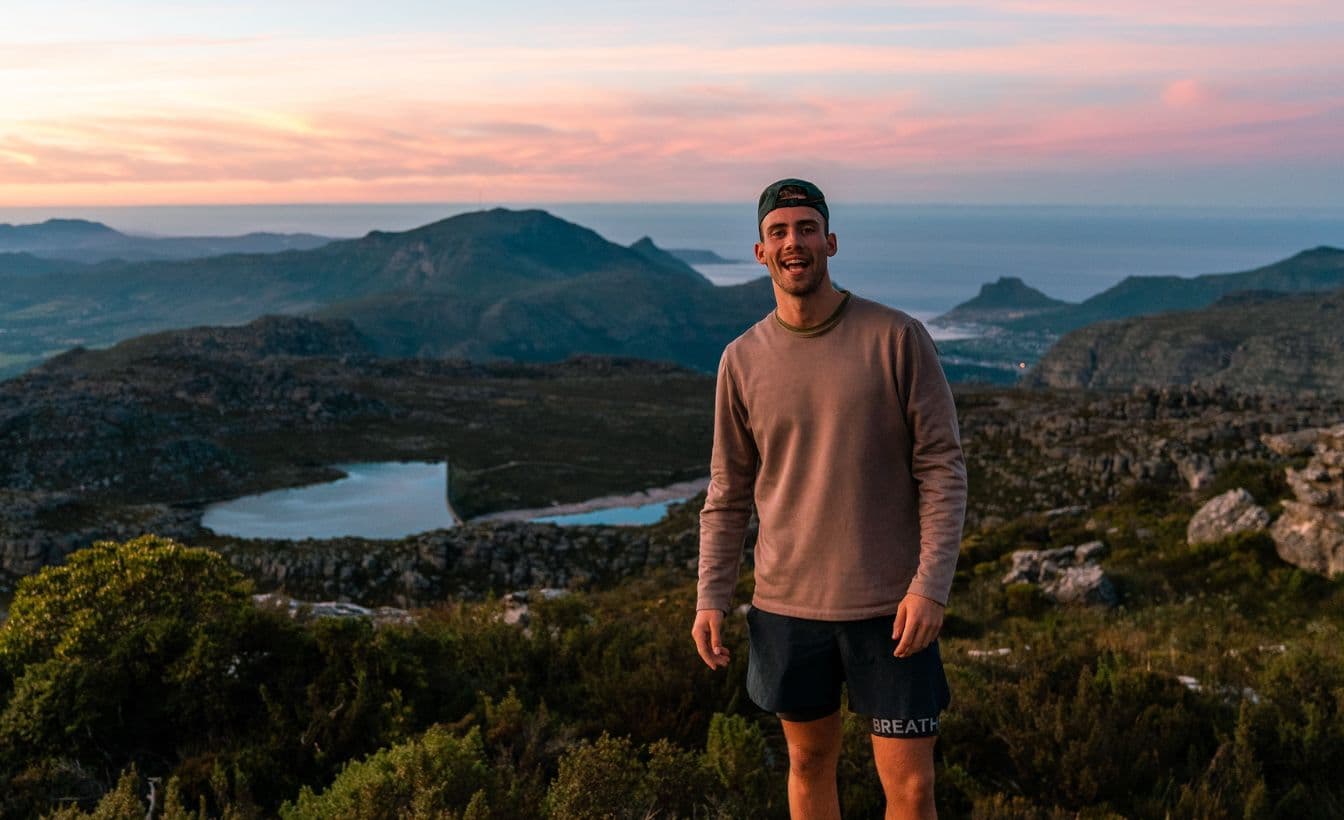
Ask him what keeps pulling him back to the mountains specifically, and the answer gets simpler, not more complicated: awe, wonder, the particular feeling of being very small next to something very old. He wants that feeling threaded through every part of his life, not just the parts spent above the treeline.
It’s worth sitting with that for a second. A person who has pushed his body across seven continents, who holds actual world records, keeps coming back for the awe, not the achievement. Perhaps that’s why so many of us keep returning. The mountains ask nothing of our résumés. They don’t care what we accomplished yesterday or what we’re hoping to prove tomorrow. They simply invite us to be fully present today.
We never really do it alone
Ask Emeny what he hopes never disappears from the endurance community, and he doesn’t hesitate: celebrating the hard work, showing up for other people’s hard days the way you’d want them to show up for yours.
It’s a simple line, and it’s easy to read past. But spend time around people who train for things most of their coworkers would call insane, and you notice something: they show up at each other’s races, stand in parking lots at 5 a.m. holding signs, and remember the exact moment a friend almost quit and didn’t.
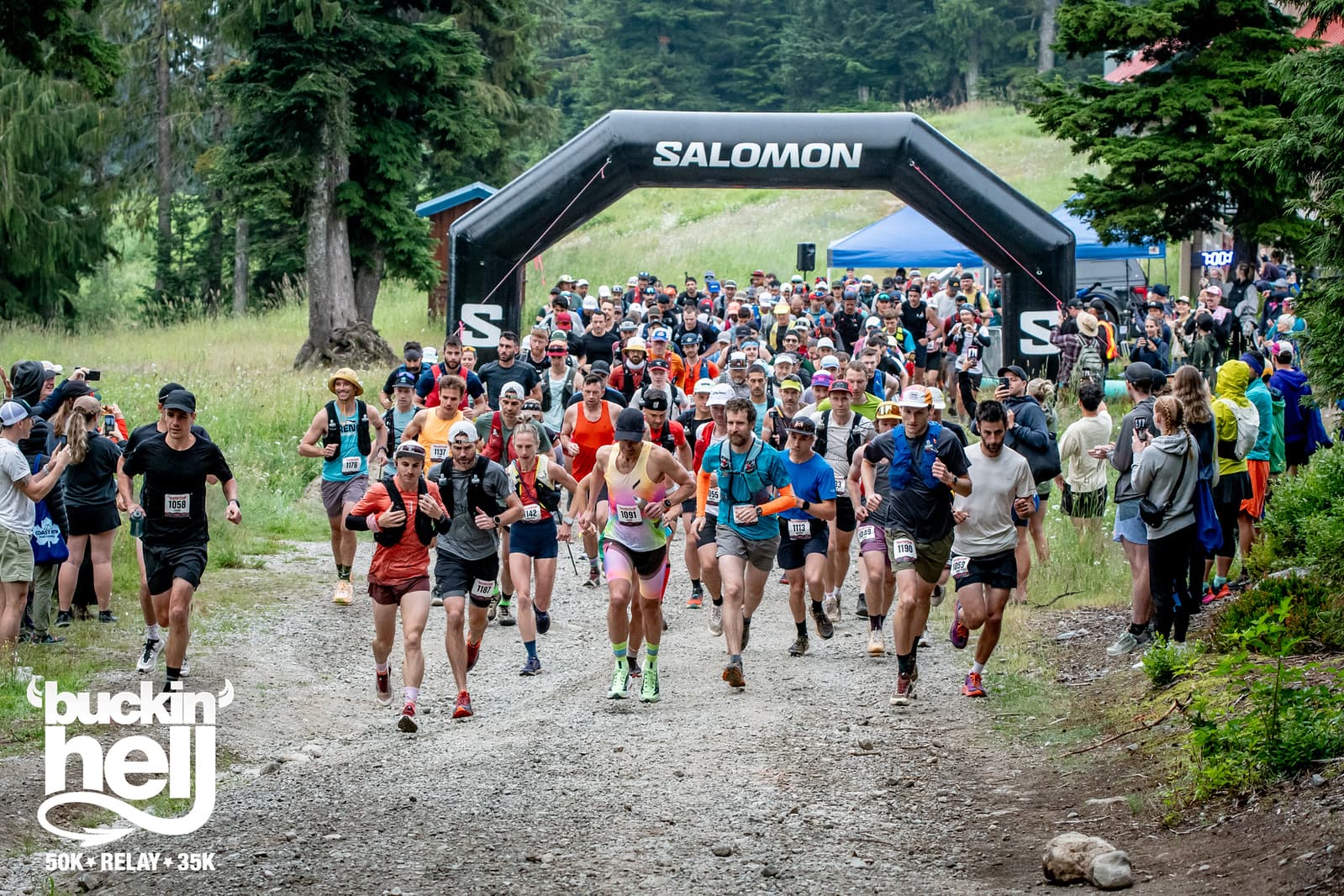
Image by Scott Robarts courtesy of Coast Mountain Trail Running
Connor believes the same principles that draw people into endurance sports also shape the communities we build away from the trail. Showing up matters. Encouraging someone else matters. Celebrating another person’s success matters. The habits that help us keep a promise to ourselves have a way of spilling into the rest of life.
That perspective has followed him beyond sport. Through his work with League of Innovators, The Young Entrepreneur Awards and as Chief Vibes Officer at North House, Connor spends his days creating spaces where people feel welcomed, connected and inspired to chase ambitious ideas. Community, to him, isn’t something that happens by accident. It’s built one conversation, one shared experience and one act of encouragement at a time.
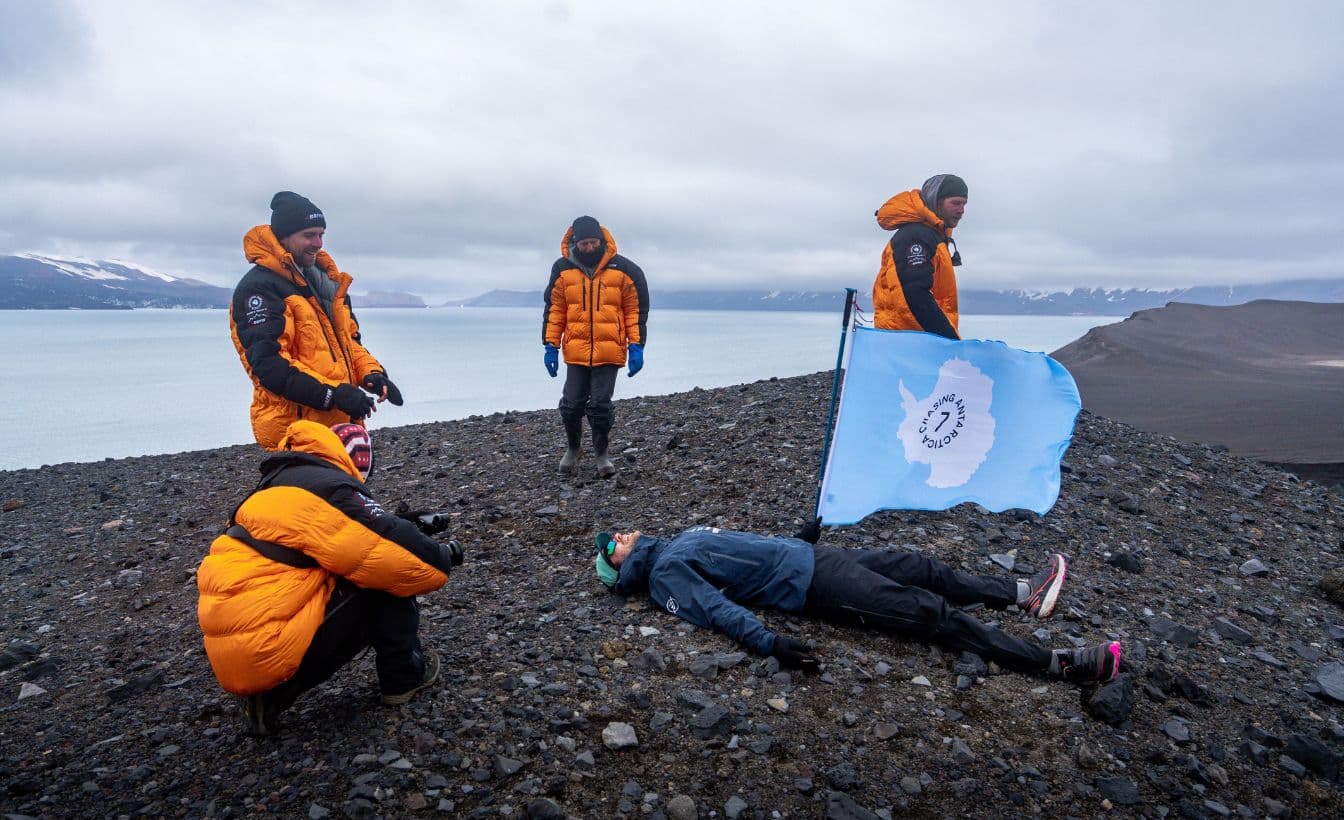
“When one of us wins, we all win”
Connor Emeny
It’s a simple philosophy, but you can see it at trailheads everywhere. Someone waits at the finish. Someone rings a cowbell. Someone remembers your name the next time you show up. Over time, those small moments become another ritual, quietly reminding us that even the most individual pursuits are rarely done alone.
There’s a version of endurance sport that’s entirely about the individual: the solitary runner, the empty trail, the numbers on a watch. Emeny’s version looks fuller than that: people cheering for strangers at finish lines, texts sent before a big effort, small anniversaries of hard things survived and remembered on purpose.
Maybe that’s the part nobody puts on the poster: shared suffering is what builds community.
Microdose discomfort
A run has to end somewhere, and for Emeny that ending comes later than the finish line: Garmin stopped, data uploaded to Strava, heart rate, pace, and elevation laid out like a map of what his body just went through. He studies it the way some people study a photograph, proof, again, that something happened and he was there for it.
Recovery has become one of his most important rituals. “The older I’ve gotten, the higher recovery has climbed on my priority list, ” he says.
“I sauna and cold plunge three times a week religiously. It’s helped my body and mind immensely.”
Connor Emeny
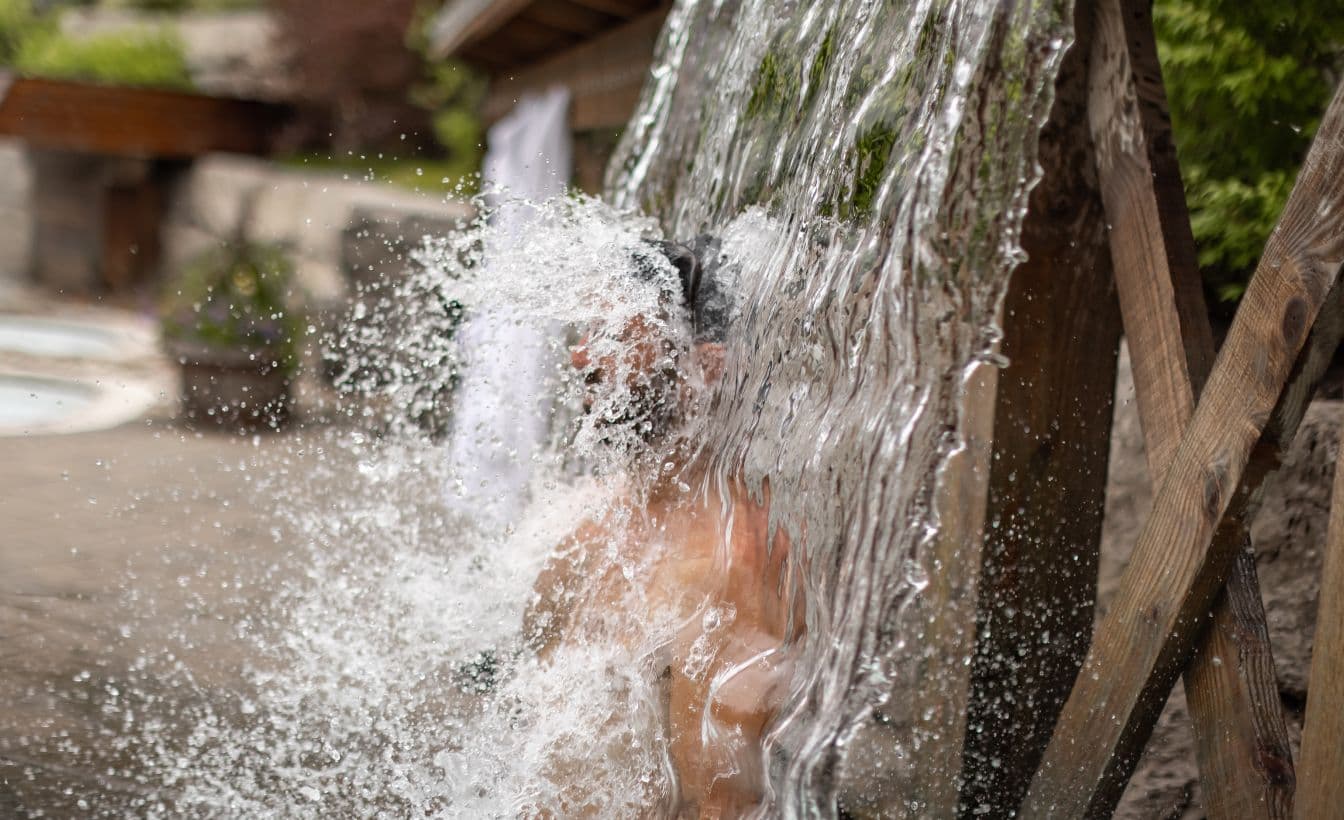
Every morning begins the same way. “I micro-dose discomfort every day.”
For Connor, that means ending his shower with cold water. It’s a small decision, made long before the day has a chance to make decisions for him. His reasoning is simple: if you choose to do something difficult when you don’t have to, the difficult things you don’t get to choose feel a little less intimidating when they eventually arrive.
Every runner has their own version of coming home. For some it’s breakfast with the people who waited for them. For others it’s a swim in a cold lake, or an hour in a coffee shop where nobody’s in a hurry to leave, or a nap that eats the whole afternoon. For some, lately, it’s twenty quiet minutes in a Nordic sauna, or a slow walk between hot pools and cold plunges with nowhere else to be.
None of it matters more than the rest. That’s the thing about rituals: the tea, the coffee, the cold water, the phone call to someone who knows your voice are all small, specific, and replaceable. What matters is the discipline underneath them. Returning to yourself on purpose, again and again, until it stops being a discipline and starts being who you are.
Emeny is already training for the next thing, probably writing the next chapter before he’s finished the last one. But ask him what still gets him excited to go outside, after seven continents and a shelf of records, and he doesn’t mention any of that. He mentions people, stories, the pieces of a puzzle he’s still putting together, one adventure at a time.
About Connor Emeny
Connor Emeny is is a world record-holding endurance athlete, adventurer, and author who lives by the mantra Dare to Dream. He is the youngest person on Earth to complete an Ironman on all seven continents, a feat that took four years, relentless determination, and an unshakable belief in what’s possible. Read all about it in his book All In.
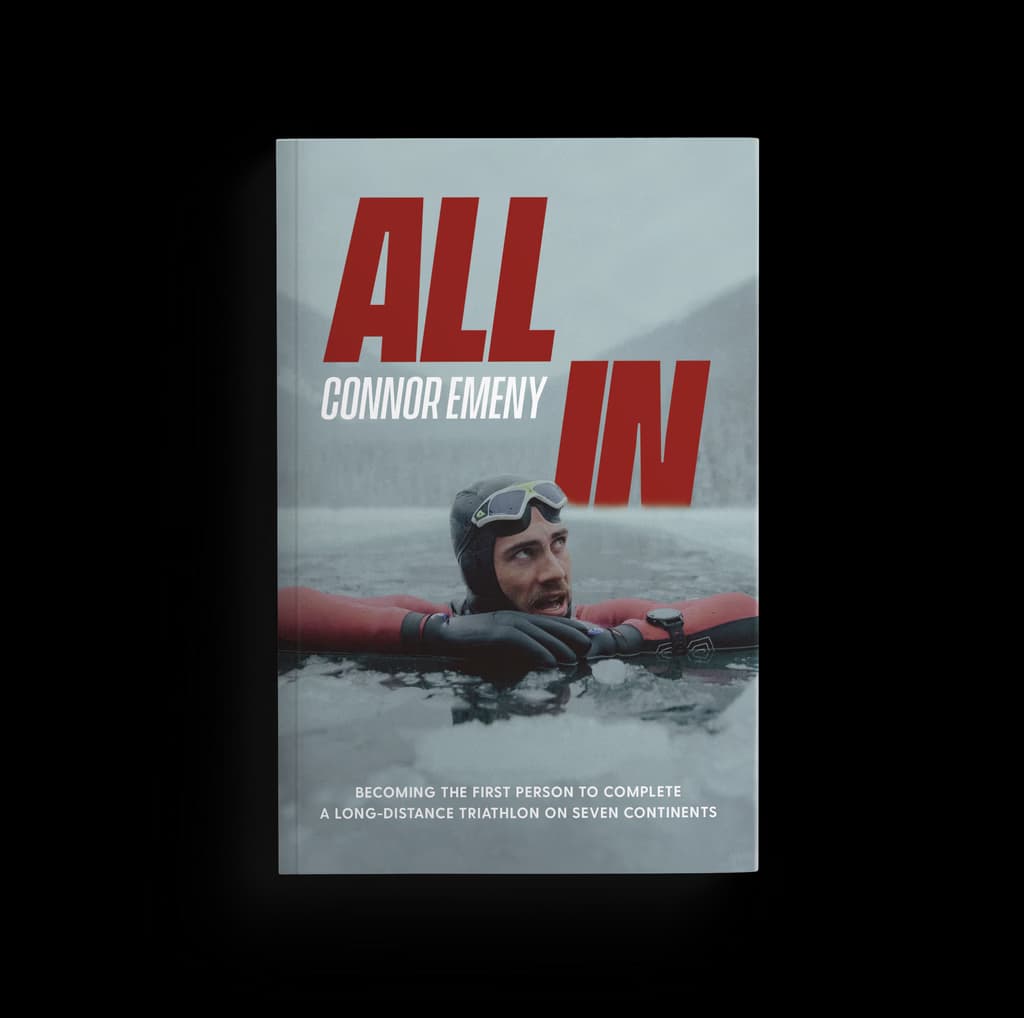
A BOOK BY CONNOR EMENY
All In: Becoming the First Person to Complete a Long-distance Triathlon on Seven Continents
All In is more than a memoir, it’s a story of daring greatly, embracing adversity and finding strength in connection. Through his achievements and the communities he’s built, Connor proves that the impossible is often just the untried.

STRAIGHT FROM THE SOURCE